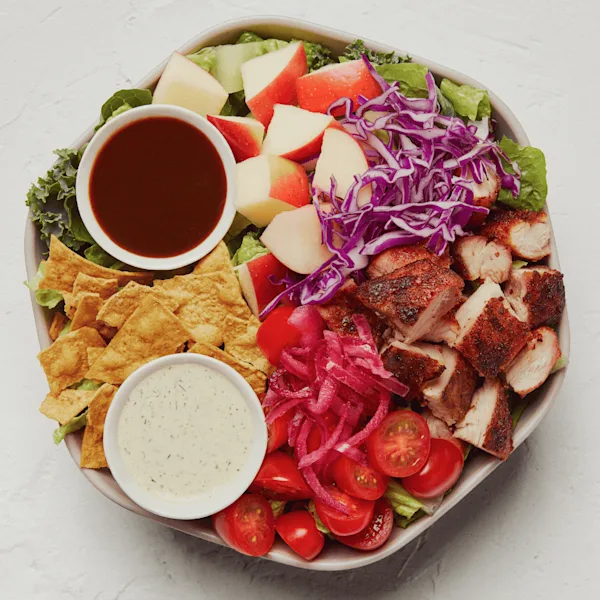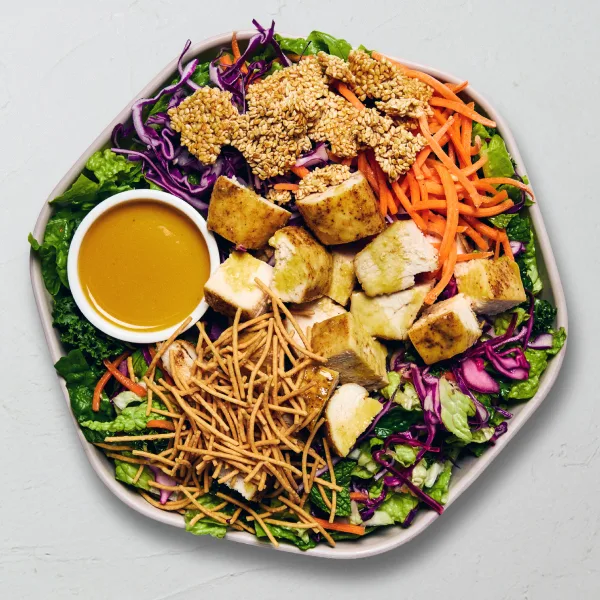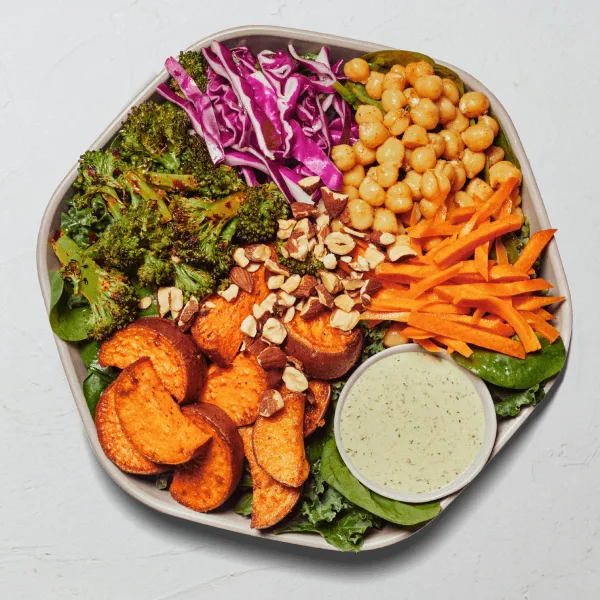
Dressing can change a custom bowl total substantially, but “dressing calories” are often misunderstood. The ingredient row is a portion used by the Create Your Own builder. It is not automatically an extra amount that should be added to every named salad, bowl, or wrap. Prepared menu products already have complete nutrition rows, while a custom bowl is assembled from individual portions.
The table below uses the same source-backed ingredient collection as the Sweetgreen Calorie Calculator. It covers every item classified as a dressing in the local snapshot dated 2026-07-10. Recipes, names, availability, and portions can change after that date.
Sweetgreen dressing calories and sodium by listed portion
Calories provide a quick comparison, but sodium is shown beside them because sauces with similar calorie totals may differ across other nutrition fields. Zero in this table means the source row lists zero for that field; it should not be generalized to an unlisted portion or a restaurant substitution.
| Dressing or sauce | Calories | Fat | Sodium | Carbs |
|---|---|---|---|---|
| Crushed Red Pepper | 0 | 0 g | 0 mg | 0 g |
| Lemon Squeeze | 0 | 0 g | 0 mg | 1 g |
| Umami Seasoning | 0 | 0 g | 65 mg | 0 g |
| Lime Squeeze | 5 | 0 g | 0 mg | 1 g |
| Sweetgreen Hot Sauce | 10 | 0 g | 170 mg | 2 g |
| Balsamic Vinegar | 15 | 0 g | 0 mg | 3 g |
| Honey BBQ Sauce | 55 | 0 g | 320 mg | 6 g |
| Pesto Vinaigrette | 110 | 9 g | 160 mg | 0 g |
| Citrus Sesame Vinaigrette | 130 | 11 g | 270 mg | 8 g |
| Extra Virgin Olive Oil | 130 | 14 g | 0 mg | 0 g |
| KBBQ Dressing | 140 | 9 g | 490 mg | 14 g |
| Lime Cilantro Jalapeno Sauce | 140 | 15 g | 380 mg | 2 g |
| Caesar | 160 | 17 g | 350 mg | 1 g |
| Lemon Tarragon Vinaigrette | 160 | 14 g | 430 mg | 7 g |
| Charred Jalapeño Ranch | 170 | 17 g | 430 mg | 3 g |
| Garlic Aioli | 170 | 18 g | 310 mg | 2 g |
| Hot Honey Mustard Sauce | 170 | 14 g | 350 mg | 9 g |
| Spicy Cashew | 170 | 15 g | 370 mg | 4 g |
| Green Goddess Ranch | 180 | 19 g | 350 mg | 1 g |
| Miso Sesame Ginger | 190 | 20 g | 390 mg | 2 g |
| Balsamic Vinaigrette | 210 | 22 g | 290 mg | 5 g |
The range starts with source rows such as Crushed Red Pepper, Lemon Squeeze, and Umami Seasoning at 0 listed calories. It reaches 210 calories for Balsamic Vinaigrette in this snapshot. Between those endpoints are distinct vinaigrettes, sauces, ranch-style dressings, aioli, oil, and vinegar. Similar names are not interchangeable: Balsamic Vinegar and Balsamic Vinaigrette are separate rows with very different totals.
Read a row as one portion, not an unlimited ingredient
One calculator quantity represents one listed source portion. If a custom bowl uses two dressing portions, the calculator applies the nutrition row twice. If a restaurant provides a lighter pour, extra container, or substitution, the modeled result can differ. The tool can count selected portions; it cannot measure the amount actually served.
Prepared entrée totals and custom dressing rows are different data
A named prepared product in the menu calorie directory uses its complete official product row. That row already represents the product’s recipe as published by the source. Adding a dressing ingredient row on top of the prepared product is correct only when the order genuinely includes an additional listed portion.
For example, do not take a prepared bowl total, identify the dressing you believe is in the recipe, and add that dressing again merely to “complete” the calculation. Doing so double-counts part of the product. The same separation applies when comparing the prepared bowl examples in the guide to Sweetgreen bowl calories: named bowls stay complete rows, while a Create Your Own bowl is built from ingredient rows.
A side dip variant is not the same as a custom dressing portion
Some wrap products have a base row that excludes the named side dip and a separate official combined row that includes it. Choose the matching wrap variant in the calculator. Do not assume the combined wrap total was created by simply adding one ingredient-table dressing row; official combined nutrients can differ slightly because published rows are rounded independently.
How to compare dressings in a Create Your Own bowl
- Start with the bowl, not the dressing. Choose the intended bases, toppings, premiums, and protein portions first so the dressing is evaluated in the context of the complete custom draft.
- Select the exact name. Distinguish vinegar from vinaigrette and similarly named sauces. The active row determines the calories and every other nutrition field.
- Set the real quantity. One means one listed portion; two means two complete listed portions. Do not use quantity as a vague proxy for “light” or “extra.”
- Review the full subtotal. Compare calories alongside fat, saturated fat, sodium, carbohydrates, sugar, and the other tracked values.
- Add the completed bowl once. The calculator snapshots the finished custom bowl as one meal line. Do not add its dressing again as a separate meal item.
This workflow makes a comparison auditable. If two draft bowls differ only by dressing, their change in total comes from the selected rows and quantities rather than a hidden assumption. It also avoids turning the table into a recommendation list: the data shows what is represented, while the reader decides which order to model.
Why dressing calorie numbers can change
Restaurant nutrition is time-sensitive. A recipe, portion standard, supplier, menu name, or regional offering can change after a snapshot. An ordering interface may also describe a product differently from a nutrition PDF. This site preserves a dated local reference so the calculation can be reproduced, but current official information should take priority for a current order.
The Sweetgreen nutrition guide on this site explains the ten tracked fields, serving context, and the boundary between prepared products and custom ingredients. For current ingredient and allergen details, open Sweetgreen’s official Nutrition + Allergens Guide.
Use the table for information, not medical or allergy decisions
A dressing row cannot confirm that a meal is suitable for a medical condition, personal nutrition target, or allergy. It does not model cross-contact, preparation surfaces, recipe changes, every substitution, or the amount actually served. Read the site’s nutrition and allergen disclaimer and consult current official sources or a qualified professional when the decision is sensitive.