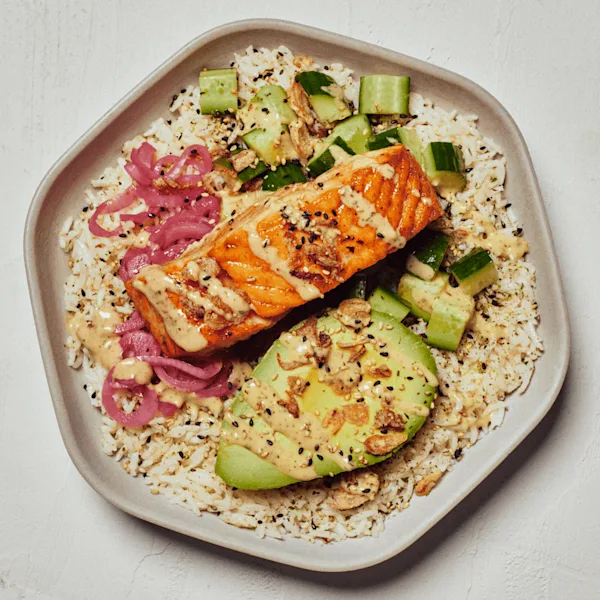
The 880-calorie value represents the full named plate, not a serving of salmon by itself. Sweetgreen’s menu page displayed 930 calories when captured on July 10, 2026, while the July Nutrition + Allergens Guide lists 880. The Sweetgreen Calorie Calculator uses the 880-calorie guide row because it provides the complete nutrition panel.
The 50-calorie disagreement is a dated source difference. It could reflect publication timing, a recipe revision, or another change that cannot be identified confidently from the two captured values alone. This article keeps them separate: 880 is the local guide row, and 930 is the menu-page display recorded on the capture date.
Miso Glazed Salmon nutrition facts
The complete guide row lists 880 calories, 48 grams of total fat, 9 grams of saturated fat, zero grams of trans fat, 60 milligrams of cholesterol, 1,092 milligrams of sodium, 77 grams of carbohydrates, 12 grams of fiber, 9 grams of sugar, and 34 grams of protein.
| Field | Amount | Field | Amount |
|---|---|---|---|
| Calories | 880 | Protein | 34 g |
| Total fat | 48 g | Saturated fat | 9 g |
| Carbohydrates | 77 g | Fiber | 12 g |
| Sugar | 9 g | Sodium | 1,092 mg |
The row’s 34 grams of protein should be read together with 77 grams of carbohydrates and 48 grams of fat. The plate is built as a complete entrée with rice, avocado, sauce, and toppings. Comparing its 880 calories directly with a standalone salmon ingredient serving would compare two different source objects.
Why the plate has more than salmon calories
The local description lists miso glazed salmon, avocado, cucumbers, pickled onions, crispy onions, white rice, nori sesame seasoning, and spicy cashew. The calorie total covers that whole combination. It is not an estimate for the fish alone with the rest of the plate ignored.
White rice contributes a substantial carbohydrate base. Avocado and spicy cashew contribute richness, while crispy onions add another prepared topping. Cucumbers and pickled onions provide contrast, and the nori sesame seasoning and miso glaze shape the flavor profile. Salmon is the named protein, but the other components are part of the same prepared row.
This is the same prepared-versus-custom boundary explained in the Sweetgreen bowl calorie guide. A named entrée should enter the calculator once. Adding the Miso Glazed Salmon plate and then adding presumed portions of rice, avocado, salmon, or dressing would double-count the recipe.
How it compares with other protein plates
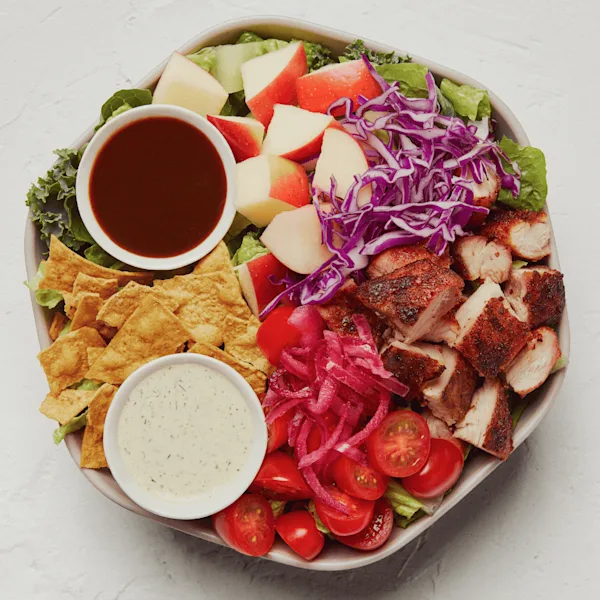
Within the same local protein-plate category, Miso Glazed Salmon is listed at 880 calories and 34 grams of protein. Hot Honey Chicken is 845 calories and 49 grams of protein. Caramelized Garlic Steak is 770 calories and 34 grams, while Steak Mezze is 755 calories and 34 grams.
The nutrient pattern varies beyond calories. Miso Glazed Salmon lists 1,092 milligrams of sodium, compared with 2,710 for Hot Honey Chicken, 1,700 for Caramelized Garlic Steak, and 1,770 for Steak Mezze. These are dated complete-product rows, not rankings or personal recommendations.
The Sweetgreen protein guide shows why a complete plate with 34 grams of protein is not interchangeable with one custom salmon portion. Browse the menu calorie directory to keep each product, category, image, source note, and nutrition row together.
How to model a modified Miso Glazed Salmon plate
If the standard product matches the order, add the prepared plate once. Add a separate drink, side, dessert, extra protein, or extra dressing only when it is actually ordered. This method preserves the published baseline and makes every additional line visible.
Removing rice, changing sauce, or skipping crispy onions may change the restaurant total, but subtracting a custom ingredient serving from 880 does not guarantee an official answer. Recipe portions and separately rounded source rows can differ. A substantially changed plate is better modeled as a custom estimate using the closest listed portions.
- Confirm that the full plate is the baseline. Do not use 880 as the calorie value for salmon alone.
- Keep source values separate. The guide row stored here is 880 calories; the dated menu display was 930.
- Add actual extras separately. A second protein, sauce, side, or drink should appear as its own meal line.
- Use custom mode for a major rebuild. Select the represented ingredients and quantities rather than subtracting guessed recipe portions.
- Review the full result. Compare protein, carbohydrates, fat, fiber, sugar, sodium, and calories after every change.
Preparation, ingredients, and allergen limits
Restaurant preparation can vary. A source row describes a defined product and serving, but it cannot measure the salmon, rice, sauce, or toppings placed in an individual order. Recipe standards, suppliers, availability, and portion execution may also change after the source date.
The local description tags wheat, soybeans, fish, sesame, and tree nuts. Those labels are relevant to the glaze, salmon, seasoning, crispy onions, and spicy cashew in the represented product. They cannot determine whether an order is halal, allergy-safe, or medically appropriate. Those questions require current ingredient information and, where appropriate, direct guidance from the restaurant or a qualified professional.
Use the site’s nutrition source guide for the dataset’s field definitions and limitations. Verify current ingredients and allergen details with Sweetgreen’s official Nutrition + Allergens Guide.