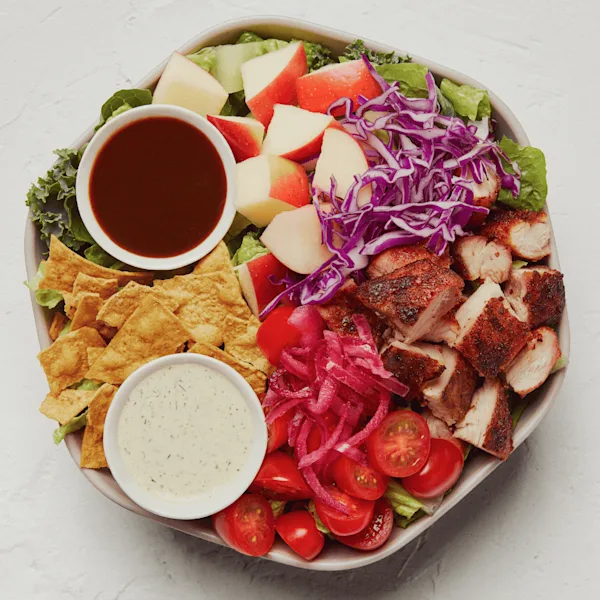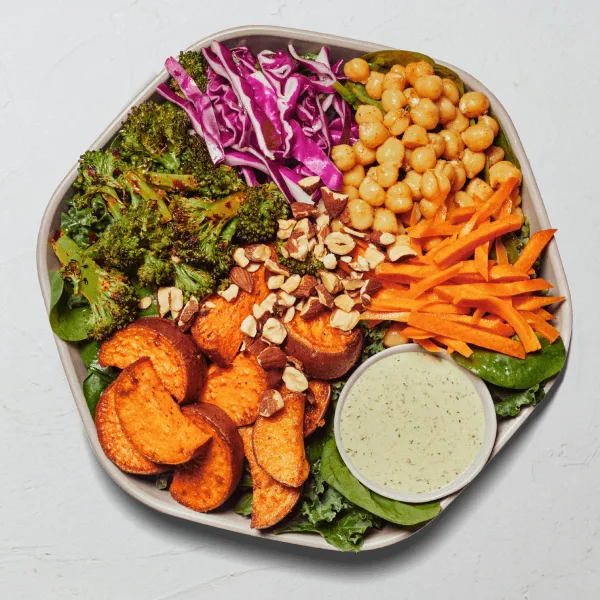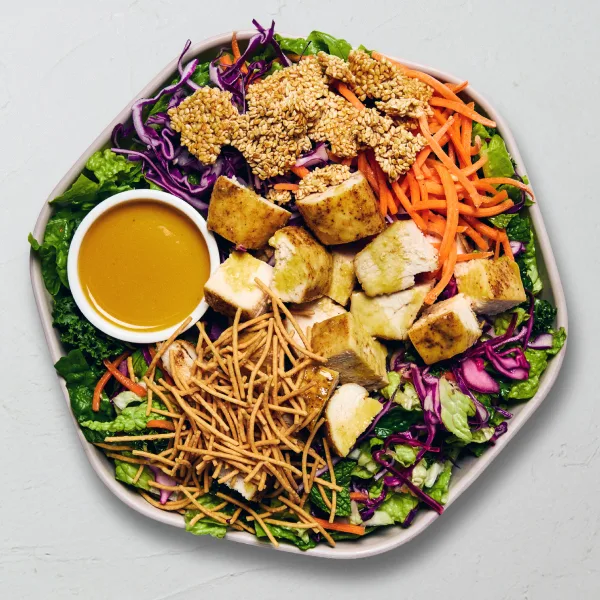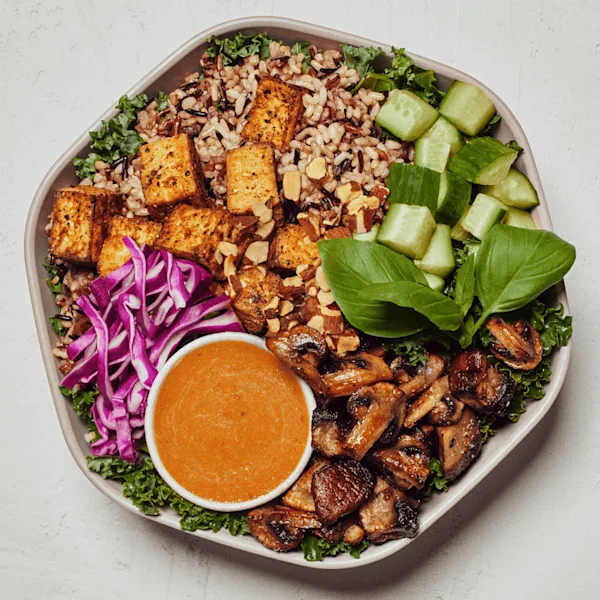
A Create Your Own bowl is a portion-based calculation. It does not begin with a hidden recipe or a default calorie number. Bases, toppings, premiums, proteins, dressings, and optional bread each contribute a source row. Quantities multiply complete listed servings, and the builder applies the selection rules captured from the dated ordering evidence.
This walkthrough uses the same local dataset as the Sweetgreen Calorie Calculator, dated 2026-07-10. It describes how the tool calculates a reproducible estimate; it is not an ordering recommendation, medical plan, or allergy-safety assessment.
Understand the six Create Your Own groups
The builder separates ingredients by their ordering role. Limits count portions, not unique ingredient names. Selecting two quantities of the same topping uses two topping portions just as selecting two different toppings does.
| Group | Minimum | Maximum | How the limit works |
|---|---|---|---|
| Bases | 1 | 2 | Choose one or two official base servings. |
| Toppings | 0 | 10 | Official ordering allows up to 10 topping portions; the first four are included in ordering price, not nutrition. |
| Premiums | 0 | 7 | Premiums and proteins share the official seven-portion aggregate limit. |
| Proteins | 0 | 7 | Proteins share the same official aggregate limit as premiums. |
| Dressings | 0 | 3 | Choose up to three dressing servings. |
| Extras | 0 | 1 | Optional bread add-on. |
Bases require at least one and allow up to two represented servings. Toppings allow up to ten portions. Dressings allow up to three, and bread is a single optional extra. Premiums and proteins look like separate groups, but both use the same limit key, so they share one combined seven-portion maximum.
The “first four toppings included” note in ordering evidence concerns price, not nutrition. Every selected topping portion still contributes its full nutrition row. This calculator does not estimate price and does not remove nutrition because a portion may be included commercially.
Build a custom bowl from exact portions
The worked example below selects two bases, three toppings, one premium, one protein, one dressing, and bread. Each line is one listed source portion. The combination is only an arithmetic demonstration; it is not presented as a suggested recipe.
| Selected portion | Group | Serving | Calories |
|---|---|---|---|
| Chopped Romaine | Bases | 140 g | 25 |
| Golden Quinoa | Bases | 83 g | 110 |
| Cucumbers | Toppings | 44 g | 5 |
| Tomatoes | Toppings | 46 g | 10 |
| Chickpeas | Toppings | 43 g | 45 |
| Goat Cheese | Premiums | 34 g | 90 |
| Blackened Chicken | Proteins | 105 g | 150 |
| Pesto Vinaigrette | Dressings | 39 g | 110 |
| Bread | Extras | 34 g | 80 |
The individual calories sum to 625 for this modeled bowl. That number is reproducible only when all nine names and quantities match. Replacing Blackened Chicken, removing bread, changing a base, or adding another dressing produces a different custom subtotal.
The broader guide to Sweetgreen bowl calories explains when to use a complete prepared bowl row instead. The rule is simple: use this ingredient workflow for a custom build, not to reverse-engineer a named menu recipe.
Calculate all ten nutrition fields
The calculator applies the same addition to calories, total fat, saturated fat, trans fat, cholesterol, sodium, carbohydrates, fiber, sugar, and protein. It does not compute calories first and guess the other fields later.
| Nutrition field | Worked example total |
|---|---|
| Calories | 625 kcal |
| Total fat | 26 g |
| Saturated fat | 8 g |
| Trans fat | 0 g |
| Cholesterol | 95 mg |
| Sodium | 1570 mg |
| Carbohydrates | 48 g |
| Dietary fiber | 10 g |
| Sugars | 4 g |
| Protein | 38 g |
If any selected row lacks a usable value, the combined field becomes Unknown rather than zero. That distinction prevents missing data from looking like a confirmed absence. In this worked example, every selected row supplies the ten required values, so the table can show a complete total.
Dressings and protein portions remain ordinary rows
A dressing quantity contributes one complete dressing serving. The Sweetgreen dressing calorie guide lists every dressing row and explains why custom portions must not be added on top of a prepared entrée unless they are genuinely extra. Protein portions follow the same quantity rule while sharing the premium limit.
Keep the draft separate from the meal
The live custom subtotal belongs to the draft. Changing ingredients changes that subtotal immediately, but it does not alter the meal summary. The bowl enters the meal only after at least one base is selected and the user chooses Add custom bowl to meal.
At that moment, the calculator snapshots ingredient names, quantities, all ten totals, and a custom-bowl sequence. The draft clears, while the saved meal line remains stable. A second custom bowl becomes a new snapshot rather than mutating the first one.
This state boundary prevents double-counting and accidental edits. Do not add the completed custom bowl and then add its ingredients separately as meal lines. Use quantity controls on the saved bowl only when the meal genuinely contains more than one identical completed bowl.
A reliable Create Your Own calculation workflow
- Open Create Your Own mode. Do not start from a named prepared product when the order is custom.
- Select one or two base portions. The bowl cannot be added without a base.
- Add toppings within the ten-portion limit. Count every quantity even when ordering-price rules treat early toppings differently.
- Count premiums and proteins together. Their shared limit allows seven combined portions, not seven in each group.
- Add up to three dressing portions and optional bread. Match names and quantities exactly.
- Review all ten draft totals. Confirm that the ingredients describe the intended model.
- Add the bowl once. Then include only separate sides, drinks, desserts, or other entrées in the meal summary.
Source and safety limits still apply
Recipes, suppliers, serving standards, regional availability, substitutions, and restaurant preparation can change after a snapshot. The calculator can model the selected listed portions but cannot measure the ingredients actually served. Use the site’s nutrition source guide and menu directory to inspect the represented data, then verify current details with Sweetgreen’s official Nutrition + Allergens Guide.
A mathematical total cannot confirm medical suitability or allergy safety. It does not model cross-contact, every substitution, or individual nutrition needs. Read the site’s nutrition and allergen disclaimer and use qualified guidance for sensitive personal decisions.