The answer belongs to a dated product row. Sweetgreen’s menu page displayed 555 calories when captured on July 10, 2026, while the July Nutrition + Allergens Guide lists 580. The Sweetgreen Calorie Calculator uses the 580-calorie guide row because it includes the complete nutrition panel.
The 25-calorie difference may reflect pages updated at different times, a recipe adjustment, or another change that the captured sources do not identify. This article does not average or silently replace the values. It uses 580 for the complete local guide row and labels 555 as the dated menu-page display.
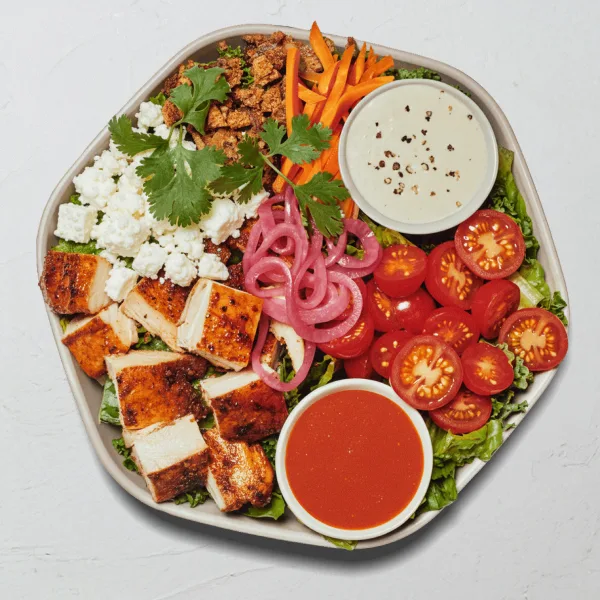
Buffalo Chicken nutrition facts
The guide row lists 580 calories, 35 grams of total fat, 7 grams of saturated fat, zero grams of trans fat, 100 milligrams of cholesterol, 1,940 milligrams of sodium, 30 grams of carbohydrates, 8 grams of fiber, 12 grams of sugar, and 37 grams of protein.
| Field | Amount | Field | Amount |
|---|---|---|---|
| Calories | 580 | Protein | 37 g |
| Total fat | 35 g | Saturated fat | 7 g |
| Carbohydrates | 30 g | Fiber | 8 g |
| Sugar | 12 g | Sodium | 1,940 mg |
The protein value is substantial within this menu snapshot, but sodium is also prominent. That is why the calorie total should not be separated from the rest of the row. The numbers provide comparison data; they do not establish a personal sodium limit, medical conclusion, or recommendation.
What the complete Buffalo Chicken salad includes
The local description lists blackened chicken, pickled onions, tomatoes, shredded carrots, cilantro, feta crumble, garlic breadcrumbs, shredded kale, chopped romaine, Sweetgreen hot sauce, and Caesar dressing. The 580-calorie row covers that full prepared combination.
Chicken contributes much of the protein. Feta and Caesar dressing add richness, while hot sauce, pickled onions, breadcrumbs, and other seasoned components help shape the sodium profile. Kale, romaine, tomatoes, carrots, and cilantro provide the vegetable base and toppings. The ingredient list explains the recipe but should not be used to rebuild the official total from separate custom servings.
A prepared salad is one source object. Blackened chicken, hot sauce, and Caesar dressing also appear as concepts that can be selected or discussed separately, but adding their custom portions on top of the prepared Buffalo Chicken row would count them twice unless the order genuinely contains extras.
Hot sauce and Caesar dressing are already represented
The complete prepared row includes both Sweetgreen hot sauce and Caesar dressing. A separate dressing row belongs in the meal only when an additional listed portion is ordered. It should not be added merely to make the calculator “match” the ingredient description.
The Sweetgreen dressing calorie guide explains how custom dressing servings differ from prepared recipes. It also shows why removing or adding a sauce in a restaurant order does not always support a precise official subtraction or addition: recipe portions and published rows may be rounded independently.
How Buffalo Chicken compares with other salads
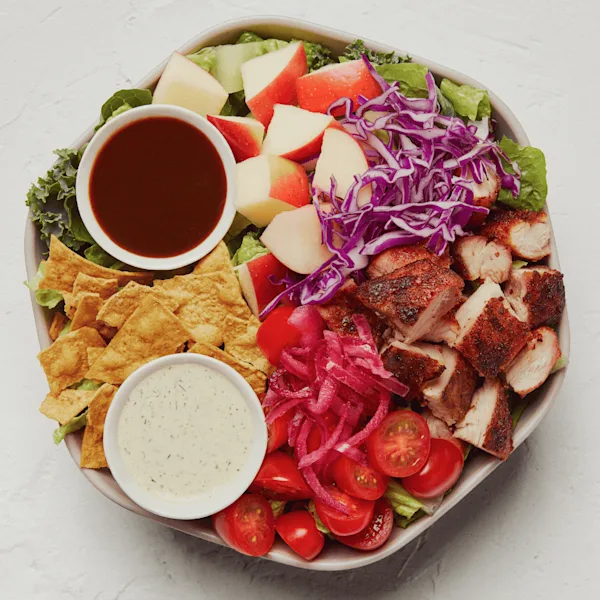
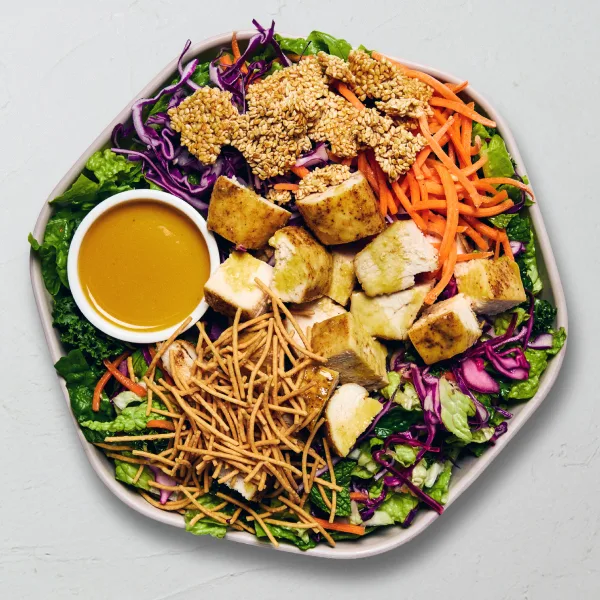
Within the same dated salad category, Buffalo Chicken lists 580 calories and 37 grams of protein. BBQ Chicken Salad lists 585 calories and 27 grams, Chicken Sesame Crunch lists 615 calories and 35 grams, and Kale Caesar lists 510 calories and 41 grams.
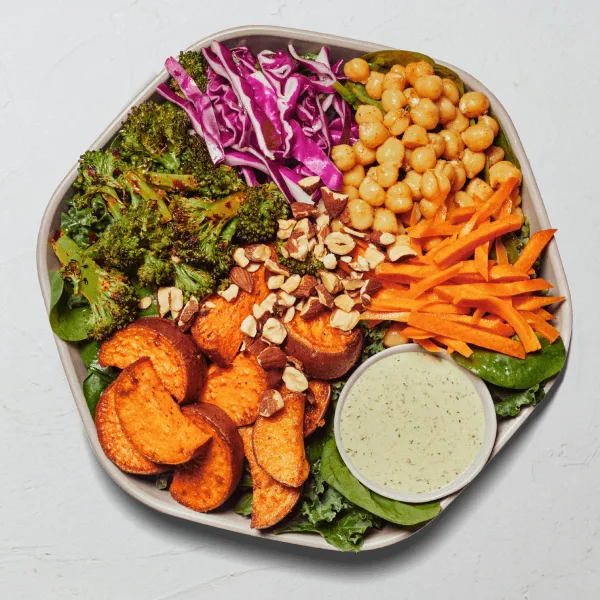
Sodium changes the comparison. Buffalo Chicken lists 1,940 milligrams, versus 1,400 for BBQ Chicken Salad, 1,435 for Chicken Sesame Crunch, and 1,400 for Kale Caesar. Guacamole Greens is listed at 575 calories, 29 grams of protein, and 1,020 milligrams of sodium. These are complete rows from one local source collection, not judgments about which item is best.
The Sweetgreen sodium guide explains how to read prepared products and custom portions without applying an individual target. The menu calorie directory keeps each product’s category, image, nutrition row, and source note together for more reliable comparisons.
How to model recipe changes and additions
If the standard Buffalo Chicken salad matches the order, add it once. Add a separate side, drink, dessert, extra chicken, or extra dressing only when it is actually included. Each extra then appears as a visible meal line instead of changing the meaning of the original product.
If the order removes feta, breadcrumbs, hot sauce, or dressing, the true revised restaurant total may not be published. Subtracting custom ingredient rows from 580 can produce false precision because the ingredient builder’s portion may differ from the prepared recipe. A heavily changed salad is better represented as a custom estimate.
- Match the starting product. Select the prepared Buffalo Chicken row only when that named recipe is the baseline.
- Preserve the source note. This site’s guide row is 580 calories; the dated menu page showed 555.
- Add real extras visibly. Additional chicken, dressing, sides, desserts, or drinks belong on separate lines.
- Use custom mode for a rebuilt salad. Choose the closest represented ingredients and quantities instead of claiming an official modified total.
- Read the full panel. Review protein, fat, saturated fat, sodium, carbohydrates, fiber, sugar, and calories together.
Ingredient and allergen limits
The local description tags meat, milk, eggs, fish, and wheat. Chicken, feta, breadcrumbs, and Caesar dressing are relevant to those tags. Product formulations, suppliers, substitutions, preparation areas, and cross-contact practices can change, so the tags and nutrition numbers cannot guarantee allergy safety.
The site’s nutrition source guide explains the date, source precedence, and field boundaries used here. Verify current ingredients and allergen details with Sweetgreen’s official Nutrition + Allergens Guide when those details affect an order.