The calorie value belongs to a dated source row. Sweetgreen’s menu page displayed 490 calories when captured on July 10, 2026, while the July Nutrition + Allergens Guide lists 510. The Sweetgreen Calorie Calculator uses 510 because that guide row includes the complete ten-field nutrition panel.
A 20-calorie source difference does not reveal which ingredient changed or whether the pages were simply updated at different times. This article therefore does not combine the values. It describes the complete 510-calorie guide row, records the 490-calorie menu capture as dated context, and leaves current verification to the live ordering and nutrition information.
Kale Caesar nutrition facts
The guide row lists 510 calories, 33 grams of total fat, 11 grams of saturated fat, zero grams of trans fat, 120 milligrams of cholesterol, 1,400 milligrams of sodium, 14 grams of carbohydrates, 6 grams of fiber, 5 grams of sugar, and 41 grams of protein.
| Field | Amount | Field | Amount |
|---|---|---|---|
| Calories | 510 | Protein | 41 g |
| Total fat | 33 g | Saturated fat | 11 g |
| Carbohydrates | 14 g | Fiber | 6 g |
| Sugar | 5 g | Sodium | 1,400 mg |
The row combines a relatively high protein value within this menu snapshot with 33 grams of fat and 1,400 milligrams of sodium. That pattern is why reading only the 510-calorie headline gives an incomplete comparison. The data describes the represented product; it does not prescribe an intake target or decide whether the salad suits an individual.
What is included in the complete salad?
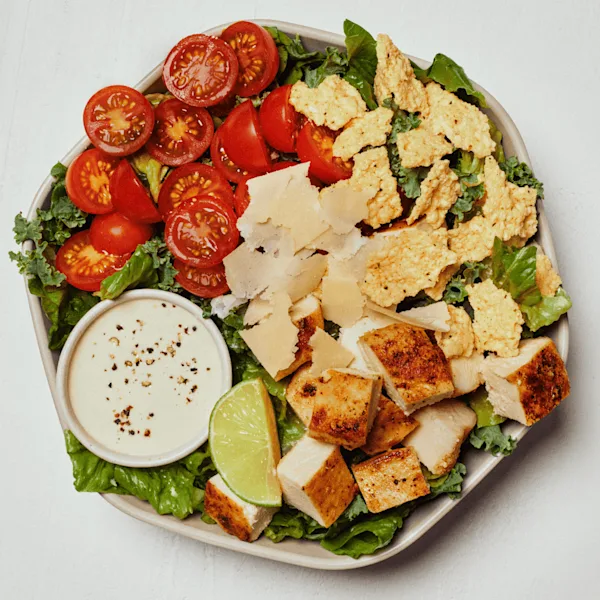
The local description lists roasted chicken, tomatoes, shaved parmesan, parmesan crisps, organic shredded kale, chopped romaine, lime, and Caesar dressing. The published nutrition row applies to that complete prepared combination. It is not the calorie value for kale alone, chicken alone, or a standalone portion of Caesar dressing.
Chicken contributes substantially to the protein total. Parmesan, parmesan crisps, and dressing help explain the fat, saturated fat, cholesterol, and sodium profile. Kale and romaine provide the greens base, while tomatoes and lime add the remaining listed produce. These ingredient roles provide context, but the prepared row should not be reconstructed from custom servings.
Prepared recipes and Create Your Own portions have different source contracts. The restaurant recipe may use portions or rounding that do not match the ingredient builder. Add the Kale Caesar once when it is the item being ordered, and add a separate ingredient only when the order genuinely includes an extra listed portion.
Caesar dressing should not be counted twice
The complete 510-calorie salad already represents Caesar dressing. Adding the prepared Kale Caesar and then adding a custom Caesar dressing serving would increase the meal only when a second portion is actually ordered. Adding it merely because the ingredient appears in the recipe double-counts part of the published product.
The Sweetgreen dressing calorie guide explains this distinction in detail. Custom dressing rows are useful for Create Your Own bowls and genuine extras. They are not replacement building blocks for recalculating every named prepared product.
How Kale Caesar compares with other prepared rows
Chicken Pesto Parm also lists 510 calories in the same local dataset, but its nutrition pattern differs: 38 grams of protein, 24 grams of fat, 30 grams of carbohydrates, and 1,560 milligrams of sodium. Kale Caesar lists 41 grams of protein, 33 grams of fat, 14 grams of carbohydrates, and 1,400 milligrams of sodium.
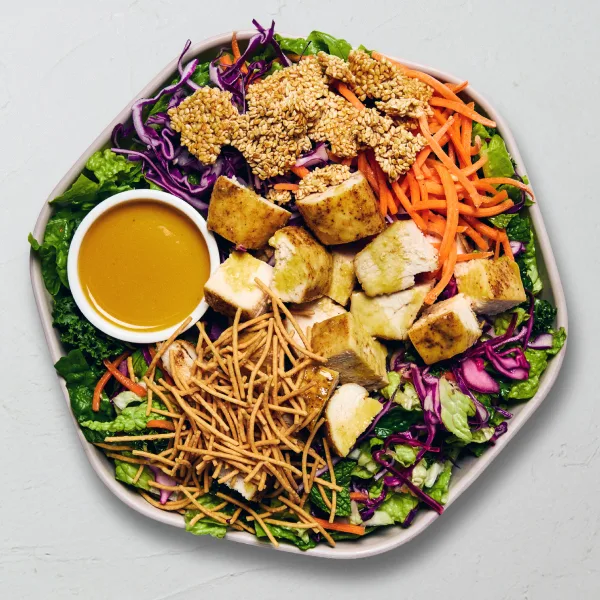
Chicken Sesame Crunch lists 615 calories and 35 grams of protein, while Buffalo Chicken lists 580 calories and 37 grams. Harvest Bowl lists 760 calories and 40 grams. The Sweetgreen protein guide offers a wider comparison of prepared products and explains why a complete entrée should not be compared directly with one custom protein portion.
Browse the Sweetgreen menu calorie directory for the complete local product rows, images, categories, and source notes. Keeping each date and product name attached to its values reduces the risk of comparing different recipes as if they were the same item.
How to model a modified Kale Caesar
If the order matches the standard salad, select the prepared Kale Caesar once. Add a drink, side, dessert, extra chicken, or extra dressing as a separate line only when it is actually part of the meal. This shows the effect of the extra without altering the meaning of the prepared row.
Removing parmesan crisps or changing dressing may alter the real restaurant total, but subtracting a custom-table row from 510 is not guaranteed to reproduce an official modified product. For substantial changes, build the closest represented combination in Create Your Own and label it as a custom estimate.
- Confirm the baseline. Use the prepared row only for the named Kale Caesar recipe.
- Keep source dates attached. This site’s guide row is 510 calories; the captured menu display was 490.
- Count extras visibly. Additional dressing, protein, sides, or drinks belong on their own lines.
- Use custom mode for a different salad. Select the listed ingredients and quantities that best match the changed order.
- Review more than calories. Compare protein, fat, saturated fat, sodium, carbohydrates, fiber, and sugar as well.
Allergen and source limitations
The local description tags milk, eggs, fish, and meat. Parmesan, Caesar dressing, and chicken are relevant to those labels. Ingredient tags cannot guarantee allergy safety because recipes, suppliers, substitutions, shared tools, preparation areas, and cross-contact conditions may vary by time and location.
The site’s nutrition source guide explains the snapshot, field definitions, and limits of prepared-product estimates. For current ingredient and allergen information, review Sweetgreen’s official Nutrition + Allergens Guide before relying on a dated row.